It was a Tuesday afternoon when Mike Callahan, owner of Callahan Cooling & Heating in Columbus, Ohio, sat down with three months of missed call logs. What he found made his stomach drop.
Forty-seven leads had gone cold. People who had called, filled out a form, or sent a message — and never heard back fast enough. Some had called during a busy install day. Others reached out at 10 PM on a Saturday. A few had simply slipped through the cracks during his team’s busiest stretch of the summer.
He did the math. Average HVAC job in his area: around $380. Bigger installs pushing $4,000 or more. Conservatively, those 47 leads represented somewhere between $15,000 and $20,000 in lost revenue. Gone. Not because his work was bad. Not because his prices were high. Because nobody followed up fast enough.
That’s when he decided to try AI-powered follow-up.
The problem most HVAC owners don't want to admit
Here’s the truth about the trades: you’re often too busy doing the work to sell the work. A technician is elbow-deep in a condenser unit. The office line rings. Nobody picks up. The customer calls the next company on Google.
Studies consistently show that responding to a lead within 5 minutes makes you 9 times more likely to convert them. After 30 minutes, that chance drops dramatically. After 24 hours, most leads have already moved on.
HVAC is seasonal, urgent, and emotional. When someone’s AC dies in July, they are not waiting around. They want a human response — or at least something that feels human — right now.
What Mike set up
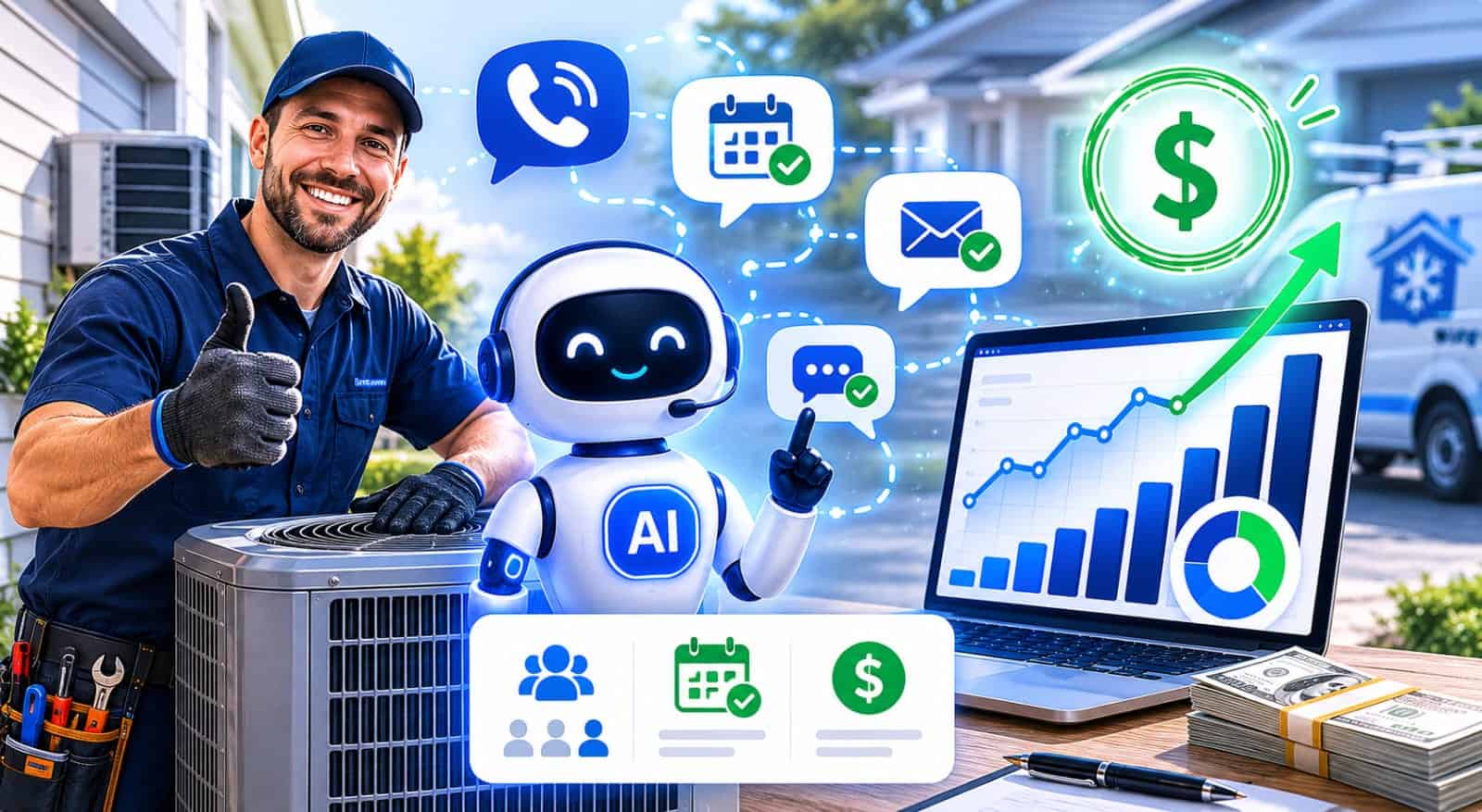
Mike integrated a simple AI follow-up system into his existing workflow. When a lead came in through his website, Google Business profile, or missed call, the AI would send a personalized text message within 60 seconds. Something like:
“Hey, this is Callahan Cooling & Heating. Looks like you reached out about your AC — sorry we missed you! Can I ask what’s going on with the unit so we can get the right tech out to you?”
Not a robot blast. Not a generic “thanks for contacting us.” A conversational opener that invited a reply.
The AI would then handle the back-and-forth — answering basic questions about pricing, availability, and services — and flag the conversation for Mike or his office manager the moment someone was ready to book.
What happened over the next 90 days
Mike ran the system for a full quarter. The results were straightforward.
Response time dropped from an average of 4.5 hours to under 2 minutes. Lead-to-appointment conversion went from roughly 22% to 41%. Of the leads that had previously gone cold, his system re-engaged old inquiries and converted 11 of them into paying jobs over that period.
Total recovered and new revenue attributed to the faster follow-up: $18,400.
His cost for the AI system? About $200 a month.
Why this works — and why most businesses ignore it
The psychology here is simple. When someone reaches out and gets an instant, warm, relevant response, two things happen. First, they feel respected. Second, they don’t keep scrolling through Google for the next option.
Most small business owners assume they need to hire another office person to solve this problem. That’s one option — but it’s expensive, inconsistent, and unavailable at midnight. AI follow-up fills the gap not by replacing your team, but by making sure no lead ever falls into silence.
Mike puts it plainly: “I’m not a tech guy. I just knew I was losing money every time my phone went unanswered. This fixed that.”
You don’t need a massive marketing budget to grow an HVAC business. Sometimes you just need to stop losing the leads you’re already generating.
Speed, consistency, and a little bit of personality in your follow-up can be the difference between a $400 job booked and a competitor’s van parked in your customer’s driveway.
The leads are already out there. The question is whether you’re the first one to respond.